
Our programs
Two Classrooms, One Continuous Path
From the first steps of toddlerhood to the year before kindergarten, our toddler and primary environments are designed to meet children exactly where they are.
- Toddler 18 months to 3 years
- Primary 3 to 6 years
- Mom & Me for families with infants
Choose a program
Where Does Your Child Fit?
Children move between environments when they are developmentally ready, not simply when a birthday passes. Your guide will talk with you well before any transition.
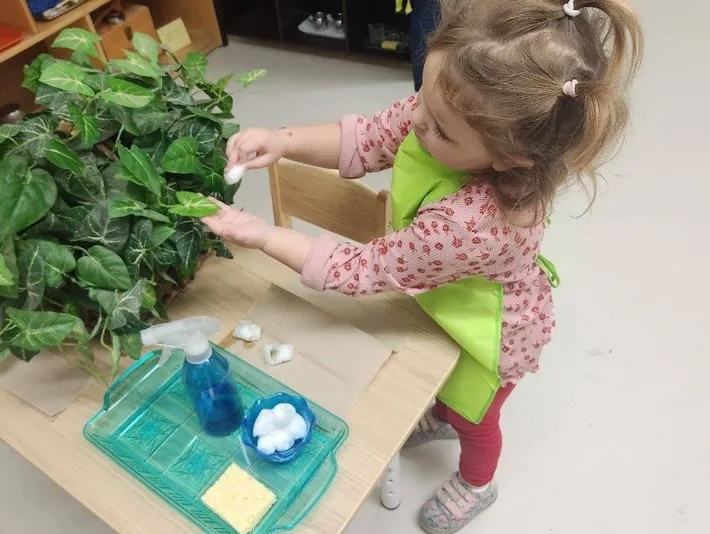
Toddler Community
The toddler years are about doing it myself. Low shelves, real tools and child-sized furniture let your child pour, sweep, dress and tidy without waiting for an adult. Language explodes in this period, and the environment is rich with naming, songs and conversation.
- Practical life: pouring, spooning, washing, plant care
- Language baskets, vocabulary cards and daily reading
- Movement, balance and fine motor coordination
- Gentle toilet independence at your child’s pace
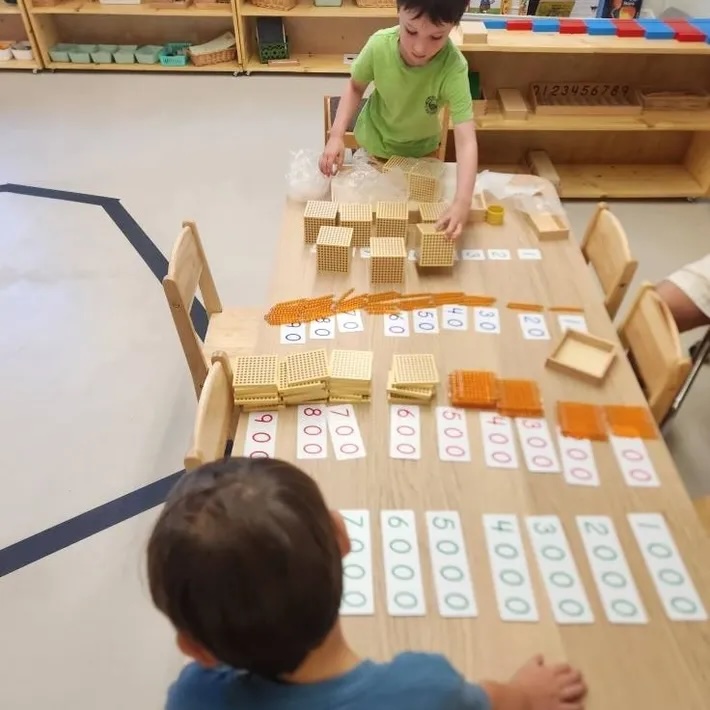
Primary Classroom
The three-year primary cycle is where Montessori does its most remarkable work. Children write before they read, hold a thousand cube before they write the number, and by the third year are often teaching the younger ones what they learned two years earlier.
- Sensorial materials that refine and order perception
- Sandpaper letters, movable alphabet, early reading
- Golden beads and the decimal system in concrete form
- Geography, botany, zoology and the natural world
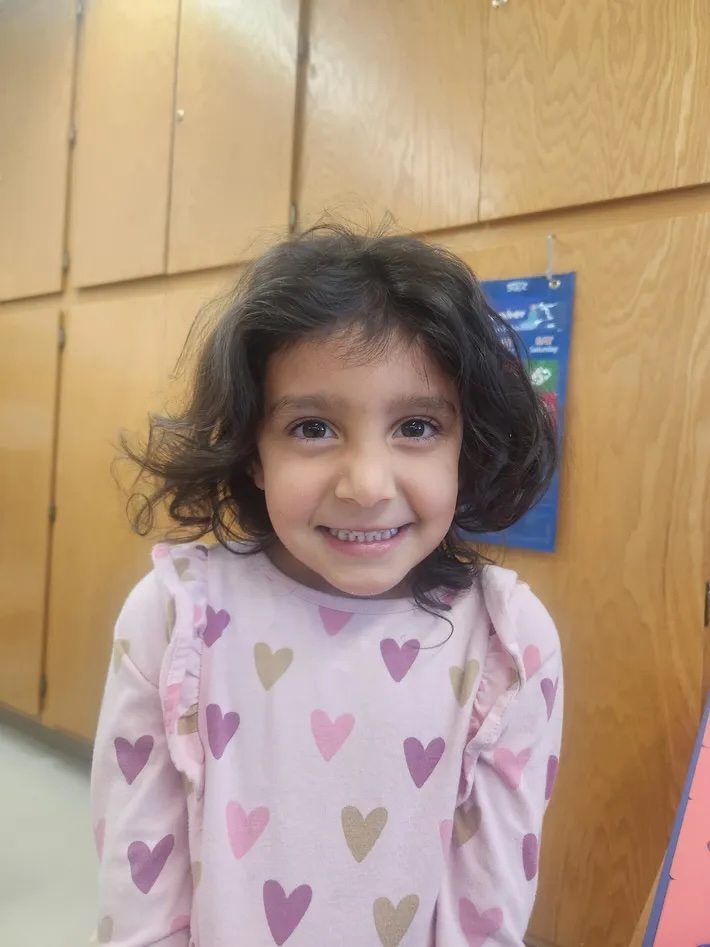
Mom & Me, Zero to Three
A family resource program for Prescott parents in the earliest years. Come with your baby or toddler, see a prepared environment up close, and take home practical Montessori ideas you can use in your own living room that afternoon.
- Guided sessions with an experienced Montessori adult
- Practical guidance on movement, sleep and independence
- A gentle first introduction before formal enrollment
- Community with other Prescott families
A day in the classroom
What the Rhythm Actually Looks Like
The shape of the day is predictable, which is exactly what frees children to be adventurous inside it.
Greeting at the door
Each child is welcomed individually, hangs their own coat and changes their own shoes. Separation is handled calmly and the same way every morning.
The uninterrupted work cycle
The heart of the Montessori day. Children choose their work, stay with it as long as it holds them, and return it to the shelf. Guides observe and give individual or small-group presentations. No bells, no transitions imposed from outside.
Snack, prepared by the children
Slicing, spreading, pouring, setting a place and washing up afterward. Snack is not a break from the work; it is some of the most useful work of the day.
Outdoors and the garden
Time in the fresh Prescott air, with a garden space shaded by the pines. Children plant, water, dig and observe the seasons change on their own patch of ground.
Circle, songs and stories
The group comes together for singing, movement, grace and courtesy lessons, and a story before the day closes.
The prepared environment
Areas of Learning
Every material on the shelf belongs to one of these areas, and every one of them is there for a reason.
Practical life
Pouring, buttoning, sweeping, caring for plants. The foundation of concentration, coordination and the quiet confidence that carries into everything else.
Sensorial
Materials that isolate one quality at a time — size, weight, color, sound, texture — so the child learns to order and classify the world.
Language
Spoken vocabulary, sandpaper letters, the movable alphabet and early reading. Children usually write before they read, and both arrive without pressure.
Mathematics
Number rods, spindle boxes and golden beads. Quantity is something a child holds in their hands long before it becomes a symbol on paper.
Culture and the natural world
Geography, botany, zoology, art and music. Puzzle maps, land and water forms, leaf cabinets and living things to care for give young children a first real sense of the world beyond Prescott.
Grace and courtesy
How to greet a visitor, how to interrupt politely, how to carry a chair without disturbing a friend’s work. Social skill is taught explicitly here, not left to chance.
Why small matters
Small Classes, Real Attention
Our class sizes are limited by design. Guides know exactly where each child is and what they are ready for next, so nobody gets carried along by the middle of the group and nobody waits while the room catches up.
It also means places are genuinely limited. Families who intend to start in the fall usually begin the conversation with us several months ahead.
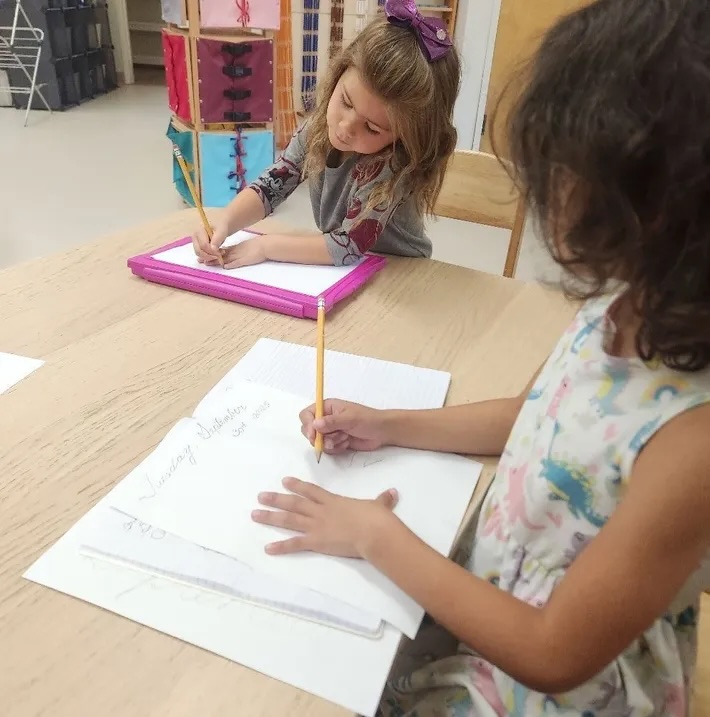
Not Sure Which Program Fits?
Tell us your child’s age and a little about them. We will tell you honestly which classroom is right and whether we have space.